Die-Cut Stickers or UV DTF Transfers?
Choose between a standalone sticker and a graphic applied to a hard surface, then test the fit on the actual item.
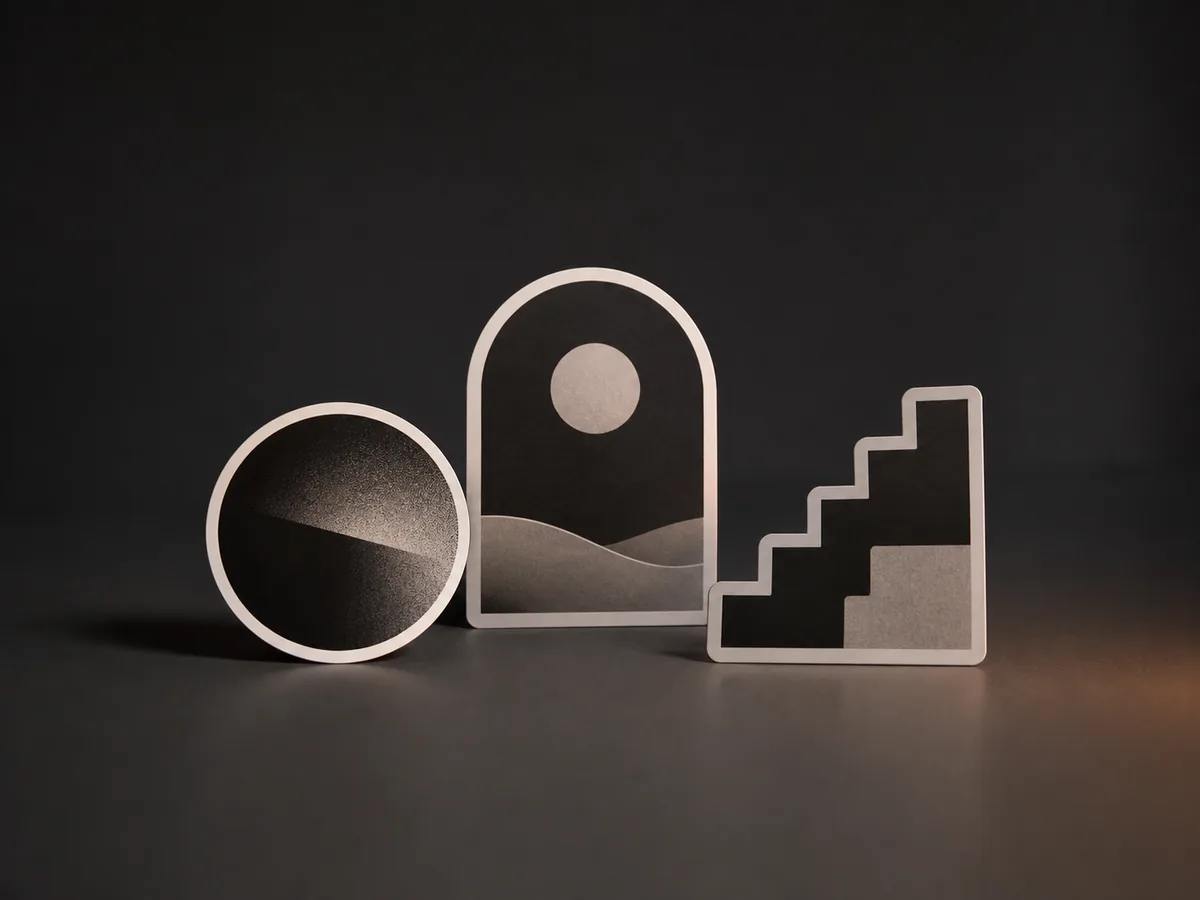
For a sticker you can drop into an order or hand out at an event, start with die-cut vinyl. For a logo you plan to apply directly to a suitable hard item, such as a tumbler or glass display, consider UV DTF PermaStik. The choice affects how you prepare the artwork and who applies it.
Use die-cut vinyl for a sticker with its own shape
A die-cut sticker has a cut outline around the artwork. Think about what the whole shape will look like, including any border. A logo made up of widely spaced letters may need a single surrounding shape to make it a standalone sticker. If your project involves applying the same label repeatedly to packaging, ask about roll labels and confirm the material and finish for the package.
Use UV DTF for a design applied directly to the item
UV DTF PermaStik uses an application film. Once the film is lifted, the transferred artwork stays on the item and open areas of the design let the surface show through. It applies without a heat press. Check whether the specific glass, metal, or plastic surface is suitable, especially if it has texture, a coating, or a tight curve.
Check the fit with a paper template
Print the layout at finished size and cut around it. Hold it against the actual jar, box, or tumbler. Check whether it crosses a seam, wraps too far around a curve, or puts small type where it is hard to read. Label the artwork with the final width and height, and note the material and any expected contact with water, abrasion, or cleaners. Test the actual sticker or transfer on a sample before applying the full batch.
Order custom die-cut stickers or explore UV DTF PermaStik transfers for hard goods.